Skin screens
“Who said that time heals all wounds? It would be more accurate to say that time destroys everything except wounds. With time, the wound of separation loses its tangible edges. With time, the desired body will soon be gone, and if the desiring body has already ceased to exist for the other, what remains is a wound without a body.”
Samura Koichi in Sans Soleil, by Chris Marker
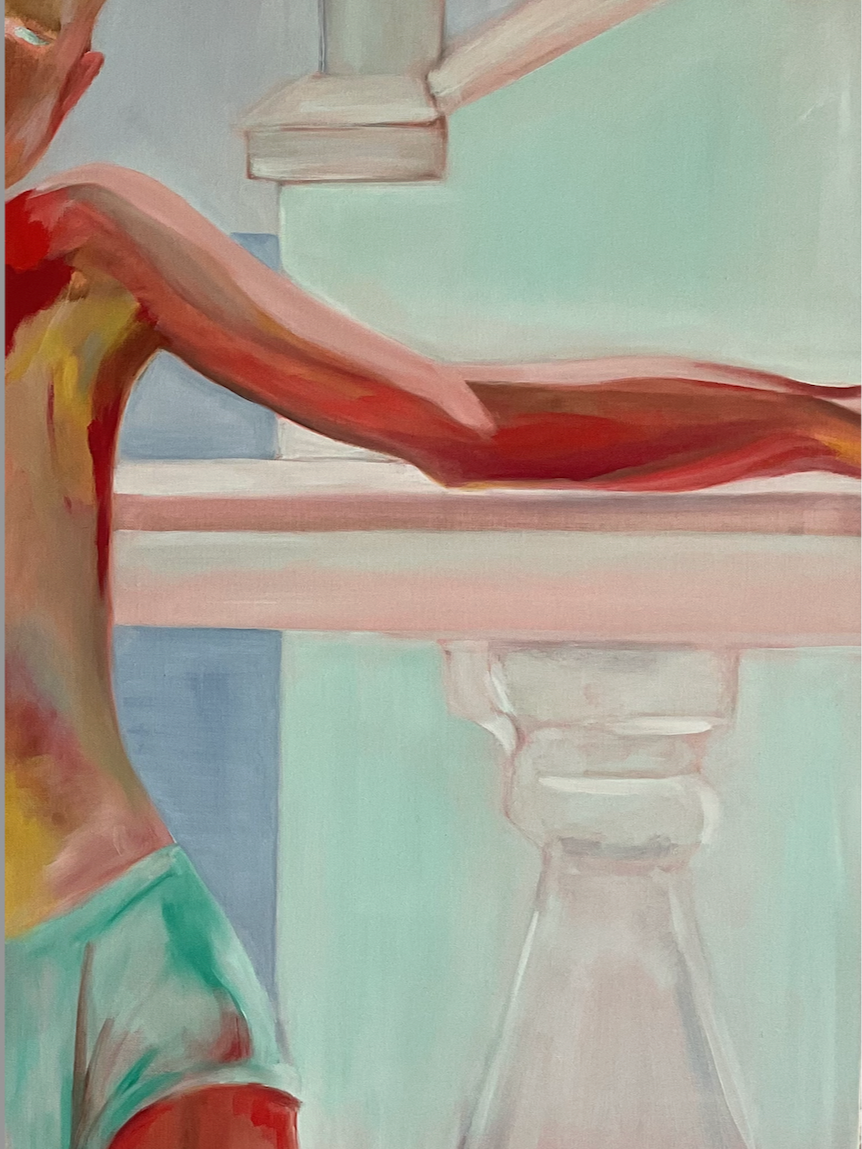
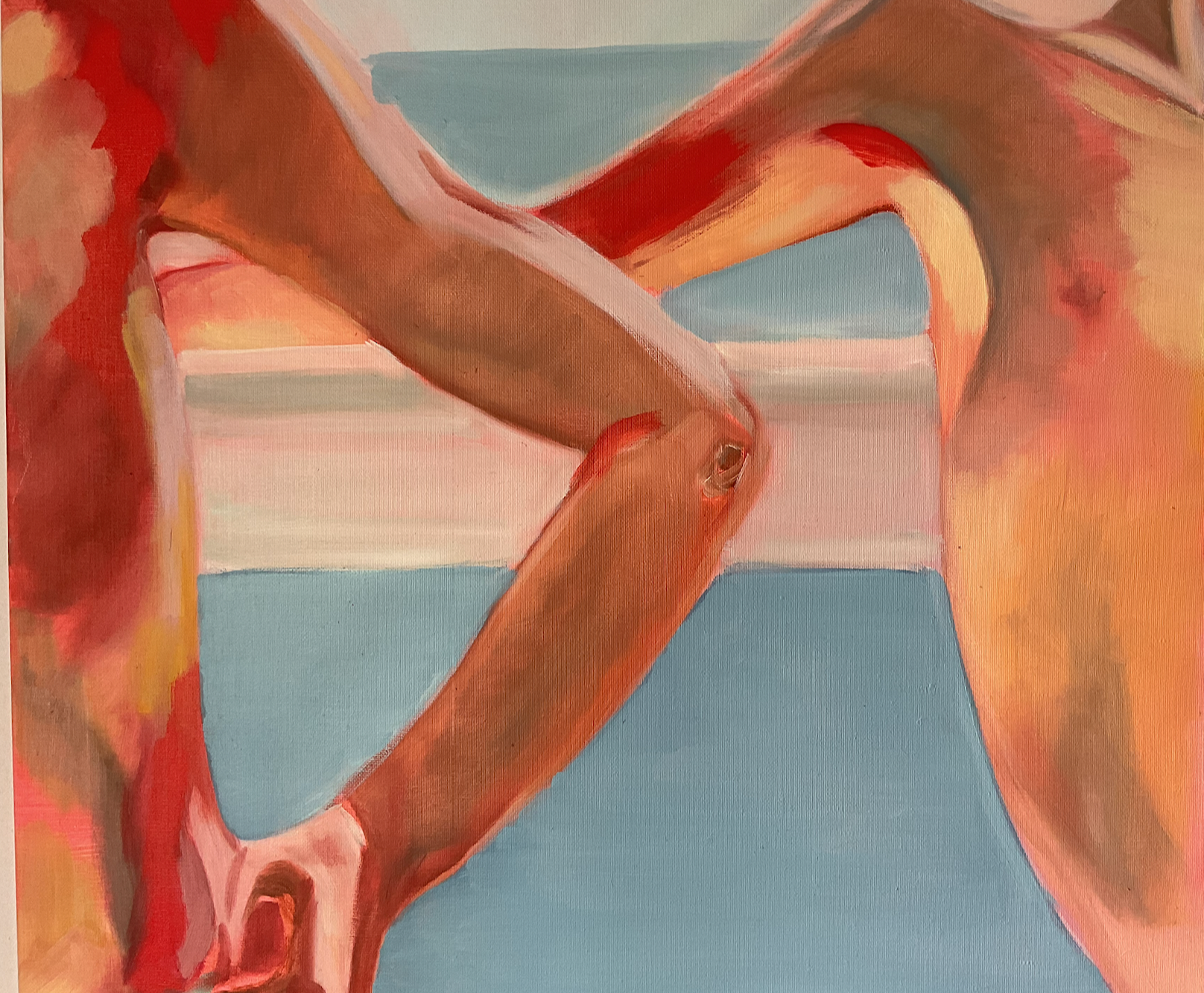
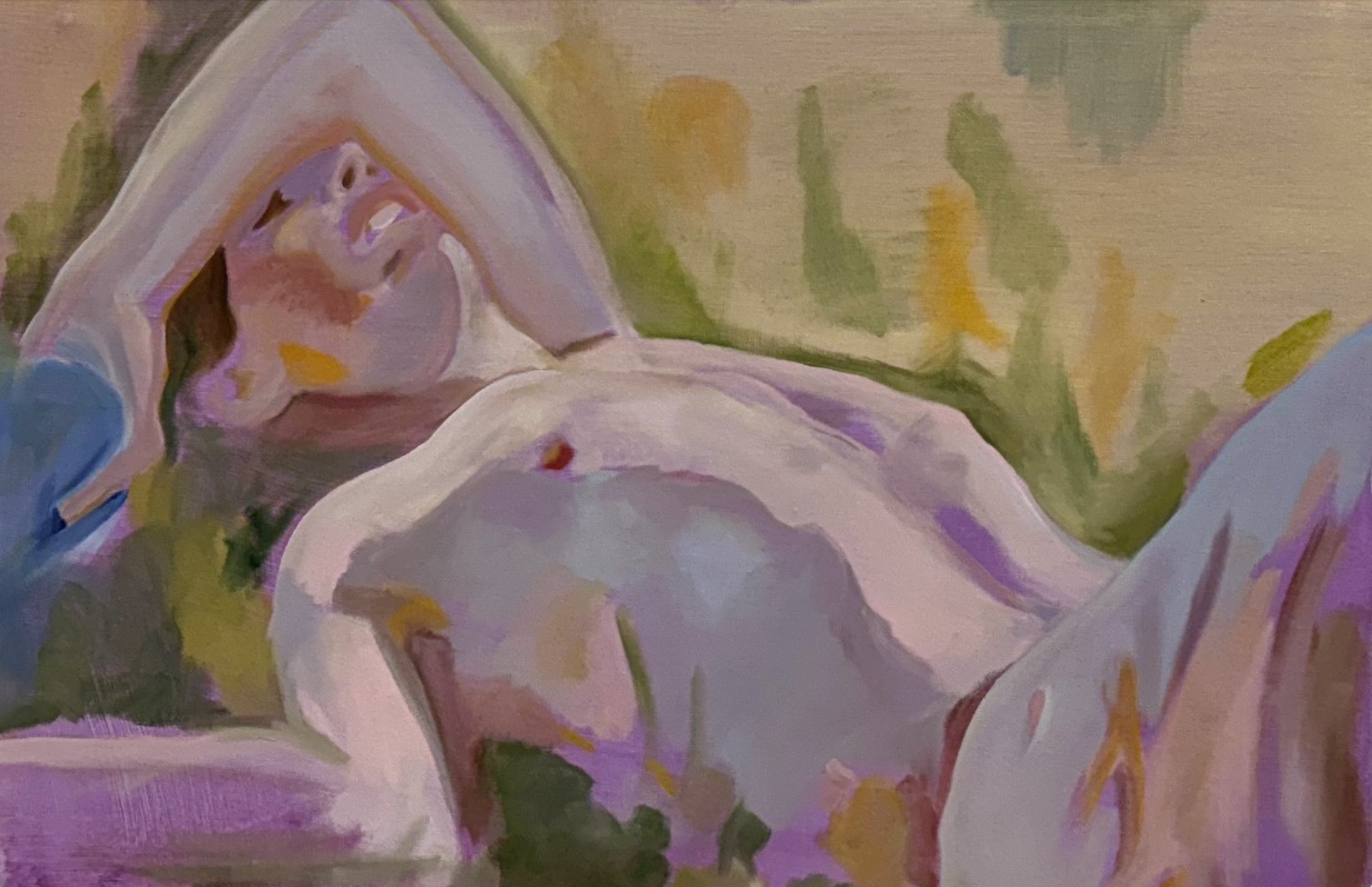
The Skin Screens paintings reinterpret existing military pictorial representations; they approach the skin as a site where affects are inscribed beyond the narrative frame of the original image. In the Skin Screens, bodies cease to function as figures and instead give way to pictorial events. The painted surface records the shame of a mediated and tension-filled body. Subcutaneous chromatic variations, wounds, and bruises are what become reactivated within the pictorial archive with which I work. Where today’s dominant military perception represents power, the Skin Screens paintings embody defeat. The colours of the diminished body are driven by the affective link between the body and the flesh of the world.
The same areas recur frequently: the back, the shoulders, the nape of the neck — sites of exposure and vulnerability. The back, especially, as a blind spot and the body’s most open spatial surface. The bodies are often seated or lying down, caught in a state of waiting or exhaustion.
Skin becomes a screen that absorbs, transforms, and releases energy. Its ecology is at once biological, political, and historical.
The highly saturated colors physically engage the viewer. More than representations, the paintings function as interfaces. The formats, which rarely exceed one meter, enter into provisional dialogues with one another, just like multi-screen film projection.
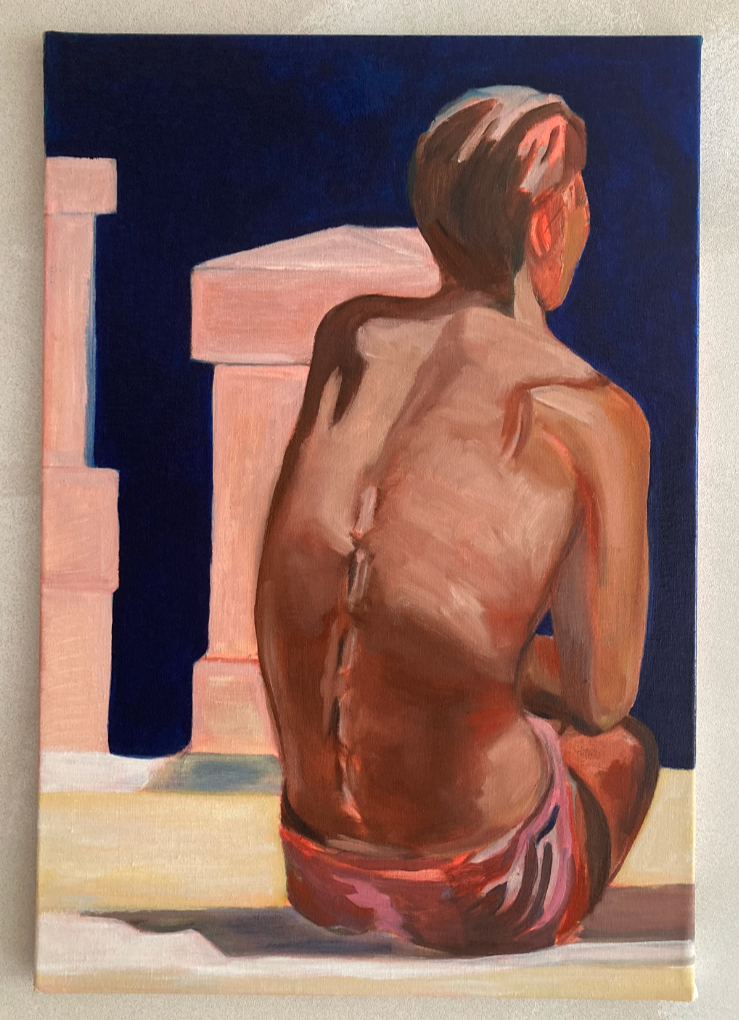
Oil on canvas, 73cm x 50cm, 2025
Oil on canvas, 73cm x 54cm, 2025
Oil on canvas, 73cm x 54cm, 2025
Oil on canvas, 73cm x 60cm, 2025